Zeitkompass Watch: Now an Assistive Device with Reimbursement (HMV 52.40.05.0011)
Since April 2026, Zeitkompass Watch has been officially listed as a care aid. Starting at Care Level 1, the long-term care insurance fund may cover the full cost.
When structure reaches its limits
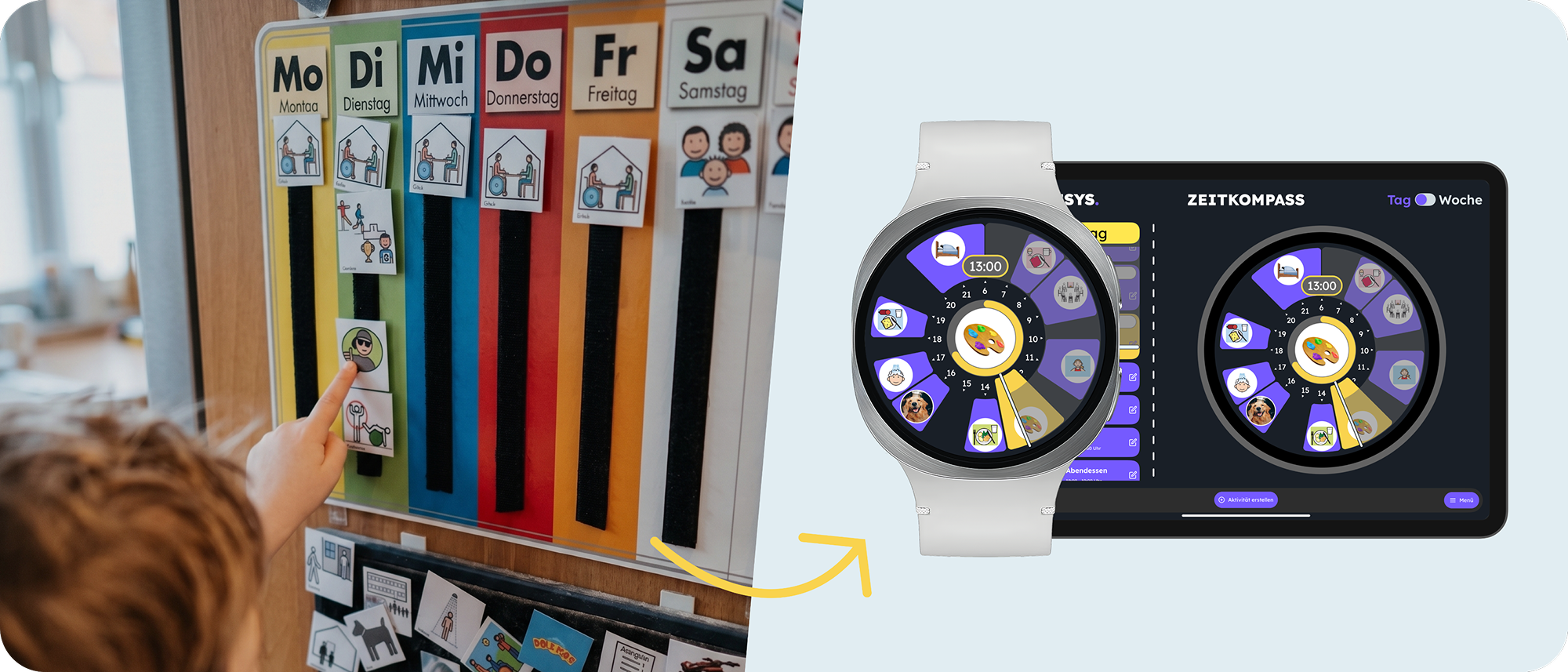
To help with time management, established approaches are typically used, such as timely reminders, symbol-based representations of activities, or help with daily time management. In practice, these features are often implemented using analog tools such as magnetic boards, Velcro charts, printed weekly schedules, or Time Timers.
Many people with cognitive impairments – such as autism, ADHD, Down syndrome, or dementia – use such assistive devices in their daily lives. They support daily or weekly planning, for example, with morning routines that involve catching the bus on time, preparing for therapy appointments, or making plans for leisure activities – and provide structure to the daily routine.
At the same time, they have their limits: they are tied to a fixed location, time-consuming to prepare, and not always flexible enough to adapt to last-minute changes in the daily routine.
Making time tangible – for greater independence
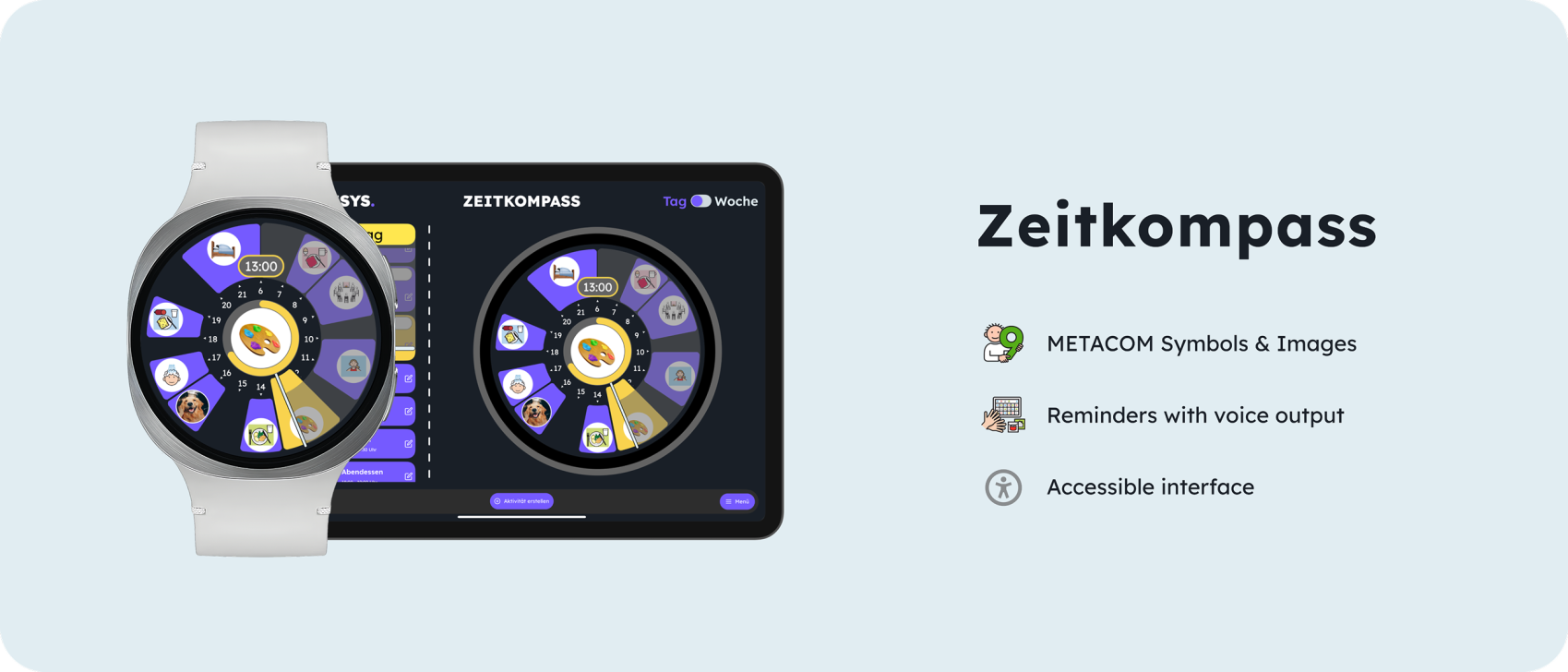
This is exactly where Zeitkompass comes in: the assistance system combines, optimizes, and integrates these proven functions for supporting time orientation into a wearable, flexible format suited to everyday life. Zeitkompass is a digital alternative to analog aids, developed for people with cognitive impairments as well as for those who have difficulties with time orientation, daily structure, or memory.
The Zeitkompass app can be used independently on a smartphone or tablet to create weekly or daily schedules, and it also serves as a companion app for the Zeitkompass Watch. The daily schedule is created in the app and displayed on the Watch – instead of clock times, fields with METACOM symbols, emojis, or personal photos show the individual activities planned for that day. Automatic reminders via vibration, voice output, and visual cues provide additional support for orientation. For accessibility, the Zeitkompass Watch has been deliberately limited in its functionality, disabling unnecessary menus and button functions.
Unlike a standard commercial smartwatch, Zeitkompass is therefore not considered a general everyday consumer item, but rather an assistive device tailored specifically to its target group. Because of these functional limitations, the Watch is also suitable for use in schools.
Result: Zeitkompass makes time and personal daily schedules tangible and understandable – for less uncertainty, more structure, and a greater degree of independence and self-determination in everyday life.
From research to a reimbursable aid
Zeitkompass is a spin-off from the University of Würzburg and was initially further developed and tested in everyday use in collaboration with workshops and support facilities for people with disabilities. These collaborations led to the first scientific publications on the further development and validation of the system. To qualify for inclusion in the list of assistive devices, a further study was conducted in cooperation with the Nuremberg Nursing Practice Center, evaluating the Zeitkompass assistance system under real-world conditions of use. The study confirmed improvements in time orientation, demonstrated the benefits of Zeitkompass, and thus formed the basis for its listing as a care aid. The result is a practical, scientifically grounded assistive device that genuinely works in everyday life.
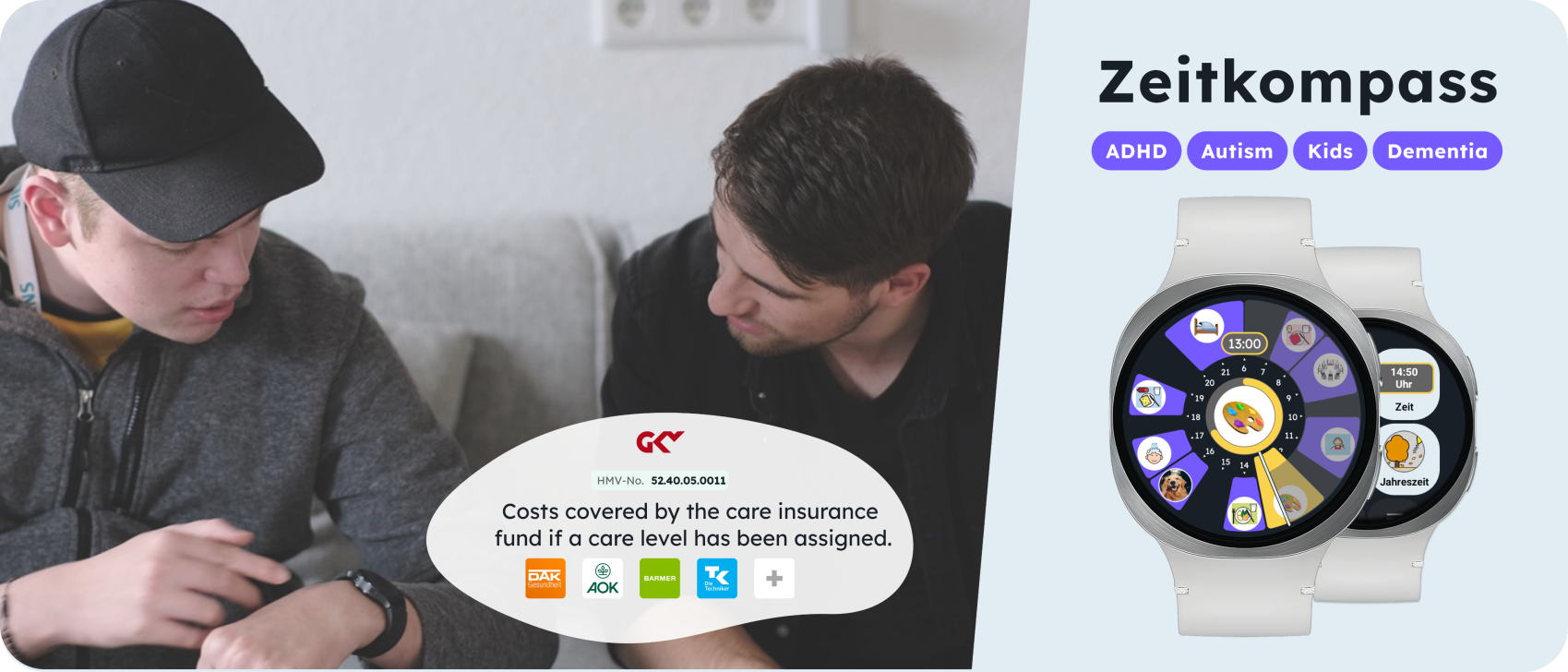
In April 2026, Zeitkompass was officially registered in the list of assistive devices under HMV number 52.40.05.0011. Zeitkompass is now available throughout Germany through our supply network. This means full reimbursement from the care insurance fund is now possible, depending on the applicant's care level and the necessity of the device.
Secure reimbursement from your care insurance fund now: Sign up for the waiting list, and we'll support you step by step with your application.
(METACOM symbols © Annette Kitzinger)