DiGA Regulation 2.0: Why 2026 is a turning point for digital health applications (DiGA)
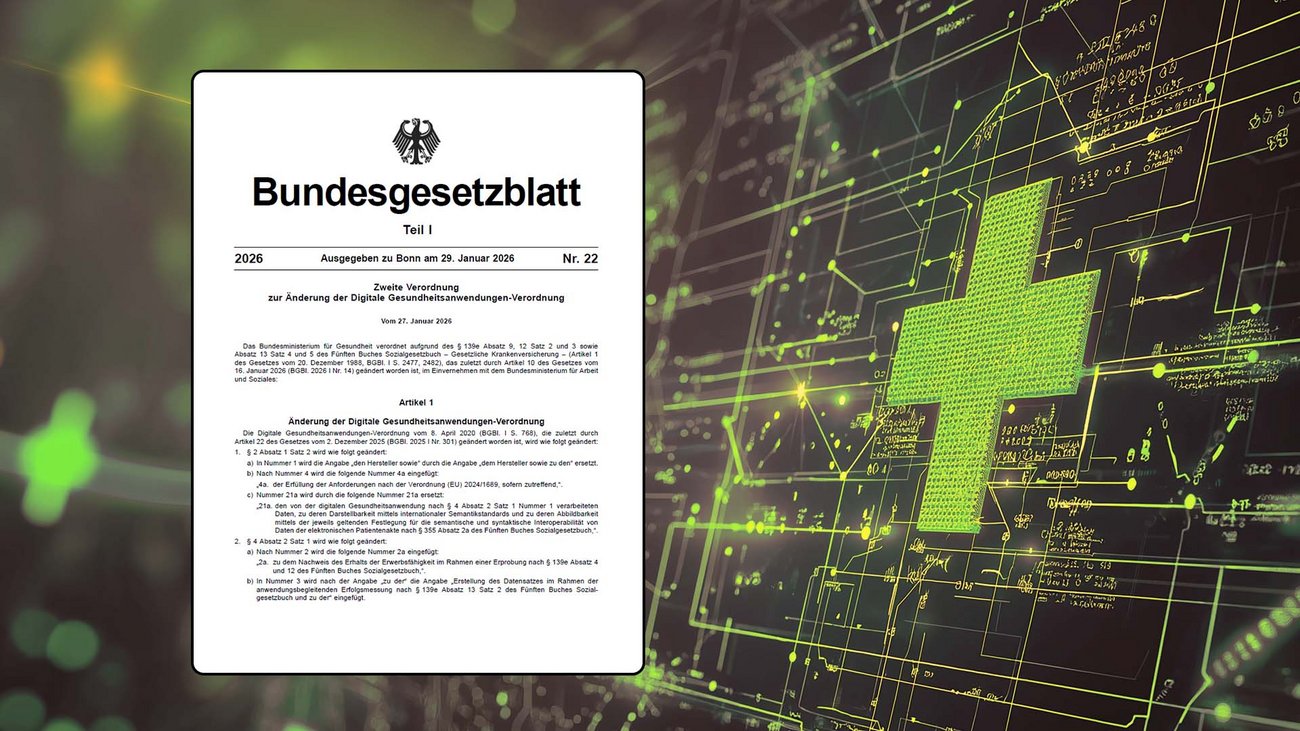
The Second Ordinance amending DiGAV, effective Feb 1, 2026, fundamentally updates the DiGA regulatory framework. Moving from selective evidence to continuous, real-world data evaluation, it brings manufacturers more transparency, higher data obligations, and new opportunities.
From one-off studies to continuous performance measurement
Probably the biggest change is the introduction of a new section on application-accompanying performance measurement. In the future, it will no longer be sufficient to demonstrate positive healthcare effects once in a single study. Instead, DiGA will be understood as continuously learning interventions whose benefits must be observed over their entire life cycle.
Manufacturers are now required to collect data on a quarterly basis and report it to the BfArM, including:
- on the duration and frequency of use
- on discontinuation rates and time of discontinuation
- patient-reported health status (PbGz)
- patient satisfaction with the DiGA
This data is not only reviewed for regulatory purposes, but also published once a minimum number of users has been reached. This makes the DiGA market more transparent, but also significantly more comparable.
Conclusion: Real-world data, analytics, and post-market surveillance are becoming core regulatory competencies.
Sources:
- §§ 23a–23e DiGAV (new)
- § 20 (4) DiGAV
New definition of benefit: maintaining earning capacity
In addition to the well-known "positive care effects," the new DiGAV establishes an equivalent second benefit pathway: maintaining earning capacity. This is more than just a semantic addition. The legislator thus explicitly recognises that digital health applications can also provide relevant benefits even if they do not primarily improve clinical endpoints, but rather:
- reduce functional limitations
- stabilise work ability
- preventing illness-related absences
For certain indications—such as mental health, musculoskeletal disorders, or rehabilitation—this opens up new opportunities for reimbursement and argumentation.
Sources:
- Section 4 (2) sentence 1 no. 2a DiGAV (new)
- § 10 (8) DiGAV (new)
- § 11b DiGAV (new)
- § 18 (1) No. 2 c DiGAV (amended)
- § 20 (3) No. 1 DiGAV (amended)
Data requirements: standardised, comparable, binding
The new Annexes 3 and 4 to the DiGAV stipulate binding questionnaires, scales, and statistical evaluations for the first time. Free interpretation or individually designed data sets are now a thing of the past.
The goal is clear:
- Comparability between individual DiGAs with the same intended use
- Plausibility checks by the BfArM
- Traceability for insured persons and service providers
For manufacturers, however, this also means that the technical implementation of data collection, statistics, and reporting will become an integral part of product architecture—not a downstream compliance task.
Sources:
- § 23d DiGAV (new)
- Section 23e DiGAV (new)
- Appendix 3 DiGAV (new)
- Appendix 4 DiGAV (new)
Interoperability and ePA: Mandatory rather than optional
Already laid out in the original DiGAV, interoperability with the electronic patient record (ePA) is now being made consistently mandatory.
- enable data export to the ePA
- comply with the applicable semantic and syntactic standards
- provide data in a human-readable and structured format
This brings the DiGA closer to the telematics infrastructure in technical terms – with all the consequences this has for architecture, update capability, and maintenance.
Sources:
- § 6a (2) DiGAV (amended)
- § 2 (1) sentence 2 no. 21a DiGAV (amended)
IT security and identity: no more transition periods
The legislator is sending another clear signal in the area of data security. All transition periods have been abolished – security requirements apply without restriction and on a permanent basis. A new requirement has been added to enable authentication via the digital identity of insured persons. Identity and access management are thus becoming regulatory-relevant design decisions.
Sources:
- § 7 (3–5) DiGAV (amended or new)
- Appendix 1 DiGAV (data security – amended)
DiGA and EU AI Act: first formal bridge
The DiGAV now explicitly refers to the EU Regulation on Artificial Intelligence (AI Act). Manufacturers must specify whether and to what extent their DiGA falls under the requirements of AI regulation. This makes it clear that AI-based DiGA are not only medical devices, but increasingly also regulated AI systems – with additional obligations in terms of risk management, documentation, transparency, monitoring, and governance.
Sources:
- Section 2 (1) sentence 2 no. 4a DiGAV (new)
- Regulation (EU) 2024/1689
Changes, updates, and releases: new threshold for “significant changes”
The revision of the regulations on significant changes brings more clarity – and a little more flexibility. Minor or purely editorial changes can now be reported via a simplified notification and incur a processing fee of €150. Substantial changes, such as those affecting:
- data security,
- data protection,
- supply effects, or
- earning capacity,
will continue to require approval.
Sources:
- § 18 (1–2) DiGAV (amended or new)
- § 26 (4) DiGAV (amended)
More transparency, more market pressure
Finally, the new regulation significantly strengthens market surveillance and transparency. In future, the BfArM will not only publish usage data, but also the reasons for removing DiGA from the directory. At the same time, the DiGA directory will be made more user-friendly and accessible. For manufacturers, this means: Good evidence, high quality of use, and stable adherence will become visible—and comparable.
Sources:
- Section 20 (3) No. 1–8 DiGAV (amended or new)
- § 20 (4) DiGAV (new)
- § 21 (4) DiGAV (amended)
Conclusion: DiGA continues to evolve
With DiGAV 2026, DiGA is evolving from an innovation-friendly special instrument to a more mature, data-driven healthcare component. Regulatory requirements are increasing – but so is the strategic importance of:
- Data & analytics
- Digital product quality
- Interoperability
- AI governance
- Continuous evidence
For manufacturers who integrate these topics early on, the new DiGAV offers not only obligations, but above all competitive advantages. SEQLY and M&M Software are happy to support you in these exciting challenges.