MedtecLIVE 2026: A home fixture for medical technology
Around 300 exhibitors across the entire medtech value chain | Joint pavilions and regional partnerships as key drivers | AI & digitalisation as flagship topics in the supporting programme
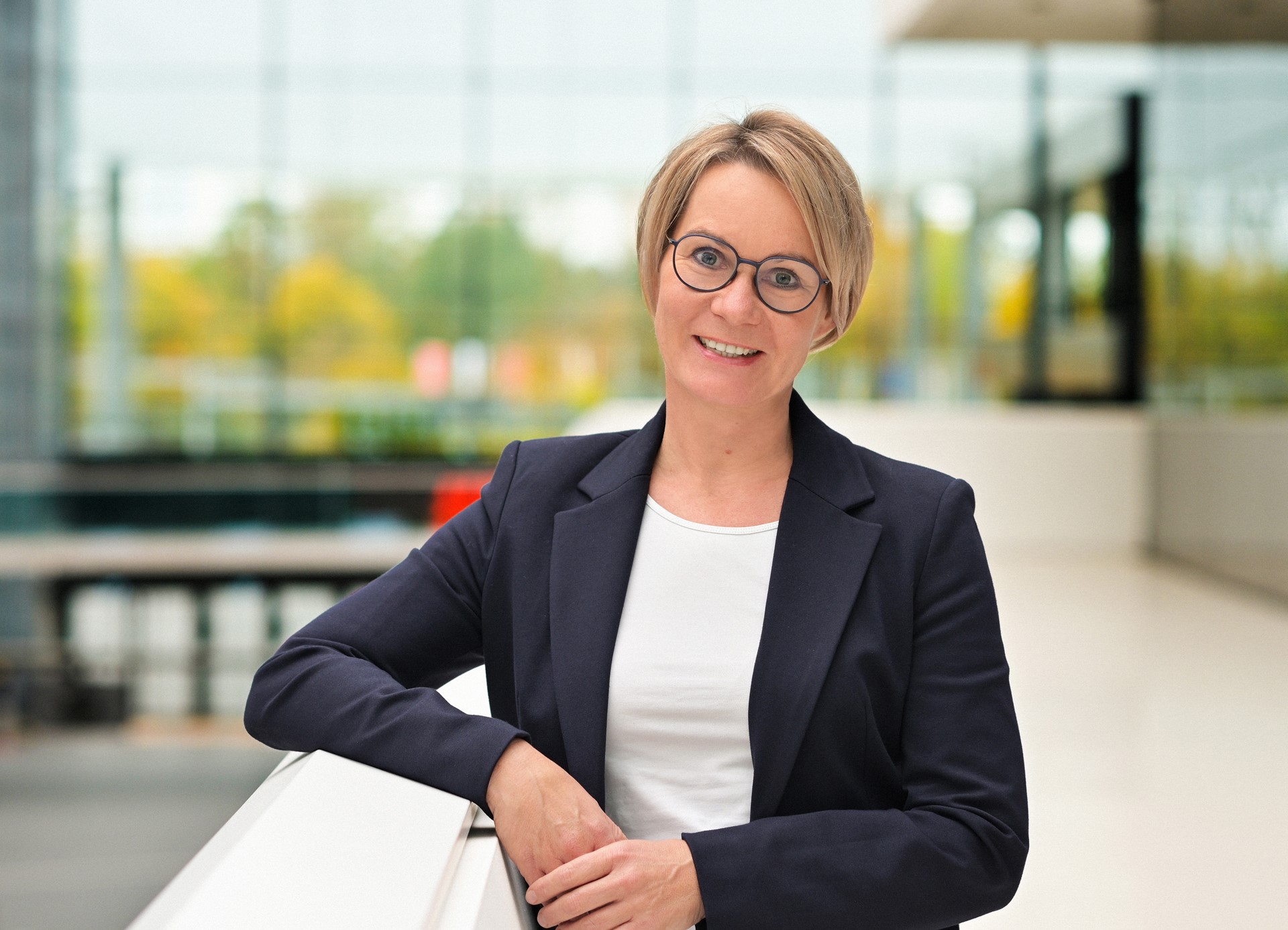
From 5 to 7 May 2026, MedtecLIVE will once again bring together German and European suppliers and manufacturers from the medical technology sector in Stuttgart. What the medtech community can expect at MedtecLIVE 2026, how the industry meeting point creates added value for visitors and exhibitors alike, and which topics are currently shaping the sector are explained by Silke Ludwig, Deputy Director MedtecLIVE.
Ms Ludwig, the German economy is currently under pressure – what positive impact does MedtecLIVE provide for the medical technology community?
Silke Ludwig: First of all, we are very well booked and are looking forward this year to welcoming around 300 exhibitors at the Stuttgart exhibition grounds. One of our major strengths lies in the balanced mix of joint pavilions organised by major associations such as Medical Mountains, VDMA, Bayern Innovativ and VDWF, as well as new partners including Kunststoff-Netzwerk Franken (Franconian Plastics Network). Italy will be represented for the first time with a pavilion of more than ten exhibitors; the Swiss medical technology association Swiss Medtech will also once again be present with an attractive joint pavilion and over fifteen companies on site.
In addition to the German networks, we are further strengthening MedtecLIVE’s European focus. We are expecting visitor delegations from, among others, the Czech Republic, the Netherlands and Ireland. That said, German suppliers in particular are currently under significant pressure. Exhibitors from tool and mould making, for example, often do not work exclusively for medical technology, but also for sectors such as the automotive industry or automation technology – and those sectors are currently facing difficulties. This has a direct impact on these companies. For such small and medium-sized enterprises, joint pavilions play an important role. From our perspective, business among dedicated medical technology suppliers remains very stable, which is positive news.
The trade fair landscape in medical technology is changing. How do you assess this development?
The most significant change is that there are now two major international medical technology trade fairs: MEDICA and COMPAMED in Düsseldorf, and WHX in Dubai. At the same time, however, the trend is moving towards smaller, curated platforms and specialised congresses, where the focus is less on direct sales and more on knowledge exchange and potential partnerships. For many of our exhibitors who operate across multiple industries, other industrial trade fairs may also be of interest. We therefore operate in a very diverse environment.
Where do you see MedtecLIVE’s strengths within this diverse trade fair mix?
We are medical technology through and through – with a clear focus on suppliers and manufacturers from Germany and Europe. At a compact event such as MedtecLIVE, visitors can explore the entire value chain in just a few steps: products, machinery and materials. This makes it possible to discover new companies and initiate projects in a highly targeted and efficient way. This already starts at the exhibition booth: at MedtecLIVE, exhibitors are not only represented by sales staff, but also by product developers, quality managers, or even the company owners or managing directors themselves. Discussing concrete challenges, ideas and solutions at eye level is where real value is created.
Through joint pavilions, networking evenings and our supporting programme, we also aim to strengthen the national and European ecosystem – particularly SMEs. Many of these companies are highly specialised, innovative and, in some cases, true hidden champions in their respective fields. Beyond the trade fair itself, strengthening the community is therefore one of our key objectives.
Many German exhibitors were very enthusiastic about WHX this year.
And rightly so, for many valid reasons. However, amid all the enthusiasm, we must not forget that Europe is the second-largest market for medical technology globally, with Germany being the largest within Europe. The majority of companies are small and medium-sized enterprises, often still owner-managed. The real challenges – ranging from regulation and bureaucracy to the shortage of skilled labour, cost pressure and the digitalisation of very small businesses – are not solved at a WHX. Major structural issues facing Europe cannot be addressed in Dubai.
Generational change in owner-managed companies is another important factor. At MedtecLIVE, where many exhibitors personally know the businesses and people around them, there is also the time and space to go beyond trade fair small talk and ask: ‘How are you really doing? I’ve heard the next generation may not be taking over...’. This is what defines MedtecLIVE. Sustainable business is created here – for example through regional partnerships and cooperation. Many of the companies I speak to feel a strong sense of responsibility towards their employees and their region.
Do you have a concrete example of such regional cooperation emerging at MedtecLIVE?
Yes, there are several successful examples. A very tangible one is the production line we set up at MedtecLIVE in Stuttgart in 2022. The six companies that came together at the time subsequently entered into a cooperation that is still ongoing today – and they all continue to exhibit with us in Hall 3. In 2026, we will therefore be presenting a mobile version of this production line, covering all manufacturing steps, directly in the exhibition aisle – effectively as a walking act. The partners market themselves jointly and, based on this cooperation, will even produce a very creative giveaway that showcases their respective competencies across the value chain.
One exhibitor once told me how important he considers this exchange among SMEs at MedtecLIVE – something he does not experience elsewhere in this form. For smaller companies, it is also about finding their way in a market dominated by major players. What do these companies need to do, what works, in order to remain competitive, including internationally? Cooperation with a joint product as an outcome is one very effective approach.
Digitalisation and artificial intelligence are key competitive factors for SMEs. How does MedtecLIVE address these topics?
AI and digitalisation are extremely important. We are continuously developing the ‘electronics’ segment of MedtecLIVE and expanding it step by step. The supporting programme currently acts as the main content driver in this area. This year’s keynote by Professor Tobias Gantner will focus on what he calls a ‘future X-ray view’, analysing in concrete terms what this means for medical technology and, more specifically, for suppliers and manufacturers. This will be followed by a panel discussion on the future of medical technology with Dr Meinrad Lugan from BVMed. Topics such as digitalisation, cybersecurity, smart health and smart production run through the entire programme – both in the presentations and in the guided tours. In the future, we aim to attract more exhibitors from this segment, which represents one of our key growth areas.
Are there any further plans for the future development of the trade fair?
For now, our focus is firmly on delivering a successful MedtecLIVE 2026 – the networking, the vibrant atmosphere created by visitors and exhibitors, and the shared excitement when the doors open. After several years of repositioning – keyword T4M – our strategy is now clearly defined. For MedtecLIVE, the path forward is Europe: every two years in Stuttgart, right at the heart of medical technology manufacturing.