Safely marked, safely used: Modern laser marking for medical devices
Safety is the top priority in medical technology—and that applies not only to the product itself, but also to its labeling. Precise, permanently legible marking is crucial for traceability, UDI compliance, and reliable identification.
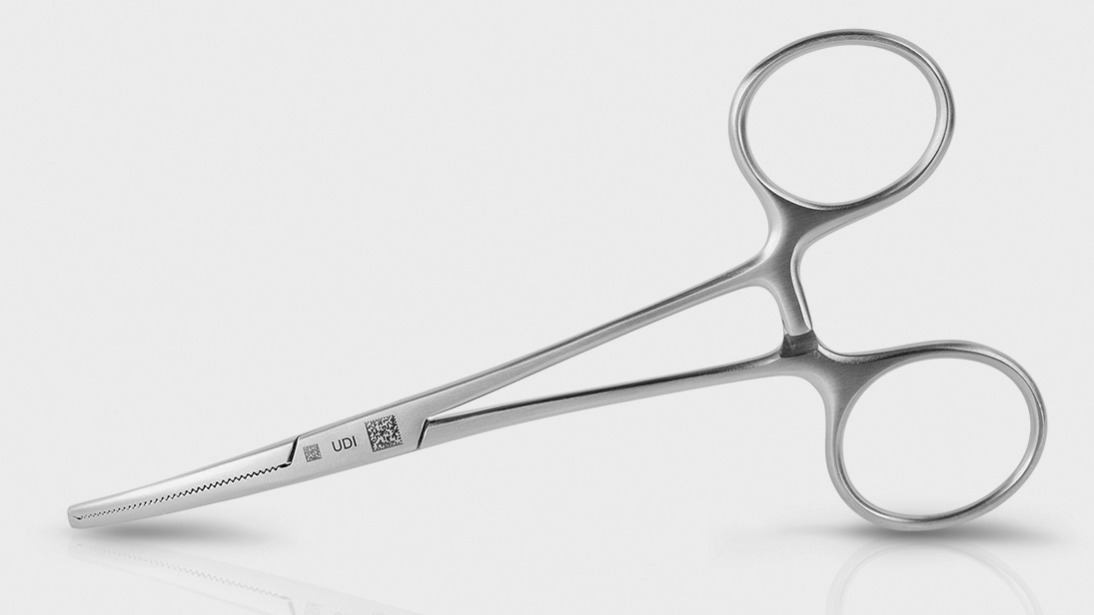
The most important criteria for safe laser marking of medical devices include corrosion resistance, material protection, and validation of the entire marking process. But what requirements must a marking meet in order to satisfy these high standards?
Permanent legibility even under extreme conditions
Reusable instruments made of stainless steel or titanium in particular must remain reliably identifiable over many cleaning and sterilization cycles. This is where sophisticated processes such as black marking with ultra-short pulse lasers come into play. This technology produces deep black, high-contrast markings that do not thermally stress the material and at the same time ensure maximum surface protection.
UV laser marking is ideal for sensitive plastics. It enables biocompatible, abrasion-resistant markings that remain stable even in demanding applications.
Process reliability as the key to quality
In addition to choosing the right laser technology, process reliability plays a key role. Camera-based systems such as the HELP process (Holistic Enhanced Laser Process) ensure:
- Precise positioning of the marking
- Automatic verification of marking quality
- Complete documentation of all process steps
- Reproducible results even with high quantities
These factors are essential for complying with regulatory requirements while increasing product safety.
Technology meets expertise
Only the combination of in-depth application knowledge, validated processes, precise camera technology, and modern laser technology can create markings that meet the high requirements of medical technology. Laser marking thus makes a significant contribution to sustainably improving the safety of products—and ultimately also of patients.