Biocompatibility and Precision: Miniature Cable Systems for Medical Technology
Biocompatible fine cables and miniature assemblies from 0.075 mm: Learn more about specialized materials and cleaning processes for the highest requirements in medical technology.
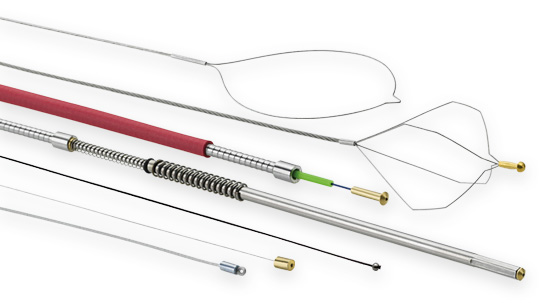
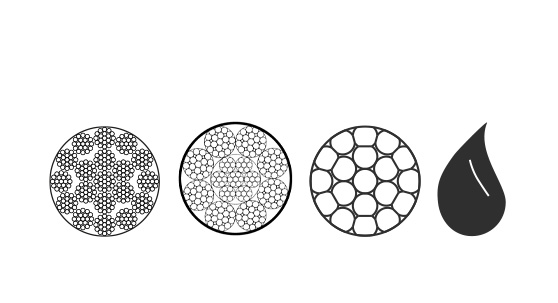
In modern medical technology, particularly in minimally invasive instruments, the requirements for mechanics and material integrity are extremely high. Wire ropes and strands must not only transmit precise control commands but also meet the highest standards of biocompatibility.
Biocompatible Materials for Patient Contact
The basis for safe medical applications is formed by materials that convince through their corrosion resistance and compatibility. Depending on the requirements, different materials are used:
- Stainless steels: High-alloy steels (e.g. 1.4401, 1.4404) for classic surgical instruments.
- Nitinol: Ideal for applications requiring shape memory or superelasticity.
- Tungsten: For cables with extremely high load capacity at the smallest diameter.
- Chromium-Cobalt: Proven in orthopedics and cardiology due to excellent wear resistance.
Material Compatibility through Surface Finishing
In order to increase mechanical performance while optimizing tissue compatibility, special finishing processes are used. PTFE coatings, for example, significantly reduce friction in moving components in endoscope syringes and prevent the abrasion of particulate residues.
Special Deep Cleaning for Hygienic Safety
A decisive factor for biocompatibility is the cleanliness of the surface. Conventional cleaning processes often reach their limits with the fine capillary structures of strands. A specially developed deep cleaning process ensures that residual dirt components are significantly reduced. Laboratory tests confirm a significantly higher effectiveness, which creates the basis for applications with increased hygienic requirements.
Precision in the Smallest Installation Space
Miniature wire ropes from a diameter of 0.075 mm enable complex movement sequences in:
- Surgical Robotics: Reliable power transmission in robot-assisted systems.
- Endoscopy: Exact positioning of instrument tips.
- Catheter technology: Controlled control and pull solutions for interventional procedures.
Using processes such as laser welding or micro-stamping, end connections are created that guarantee a defined load capacity with reproducible quality.